Coming Home to Your Body- Even if You’ve Been Avoiding it.
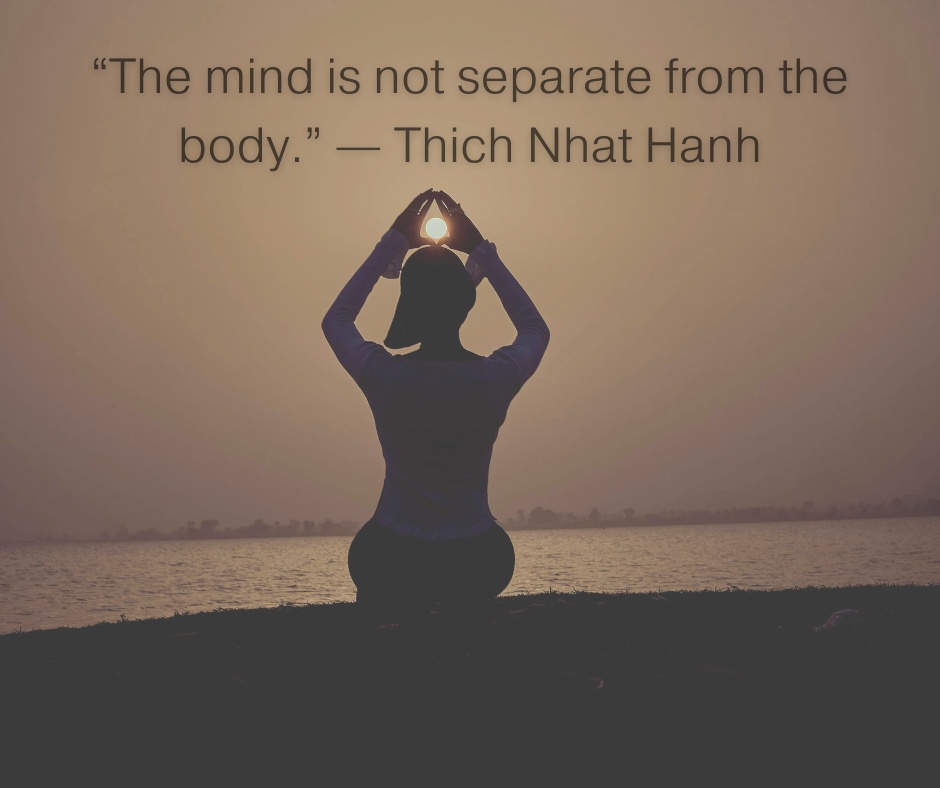
If you’re like most high-functioning adults, you’re very good at living from the neck up.
You can analyze your emotions. You can explain your patterns. You can understand why you react the way you do. You can even articulate your childhood wounds with impressive insight.
And yet… your shoulders are still tight.
Your jaw still clenches.
Your stomach still flips at 2:00 a.m.
Because insight is powerful — but it isn’t the same thing as regulation.
The Body Keeps Track (Whether We Want It To or Not)
The nervous system doesn’t care how self-aware you are.
It responds to stress, threat, overwhelm, and uncertainty automatically. When something feels unsafe — physically or emotionally — your body mobilizes. Heart rate increases. Breath shortens. Muscles brace. Or, sometimes, everything slows and you shut down.
These are not flaws. They are survival responses.
The problem is that many of us learned to override them.
We learned to:
Push through exhaustion.
Ignore hunger.
Downplay tension.
Smile while internally spiraling.
Call adrenaline “productivity.”
Sound familiar?
When We Leave the Body
For some, leaving the body looks like dissociation — feeling numb, disconnected, foggy.
For others, it looks like chronic overdrive — always busy, always managing, always “fine.”
Both are adaptations. Both once made sense.
But healing often begins when we gently come back.
Not by forcing ourselves to feel everything at once.
Not by digging for trauma.
But by noticing.
What Returning to the Body Actually Looks Like
It might look like:
Taking one slower breath.
Dropping your shoulders.
Realizing you’re clenching your jaw (again).
Eating something that isn’t jelly beans.
Going for a walk without your phone.
Letting yourself cry without explaining it away.
It’s not dramatic. It’s subtle.
And it’s powerful.
Because when we begin to notice our internal state, we create choice.
Regulation becomes possible when awareness comes first.
Why This Matters for Trauma and Stress
Unprocessed stress lives in the nervous system. Not as a story, but as activation.
That’s why body-based therapies like EMDR, Brainspotting, ART, somatic work, and trauma-informed yoga can be so effective. They don’t just talk about what happened — they help the body complete what got stuck.
When we approach healing through regulation instead of force, the system softens. The body learns it is no longer in danger.
And from there, integration becomes possible.
A Small Practice for This Week
You don’t need a full protocol.
Start here:
Once a day, pause and ask:
What am I noticing in my body right now?
Is my breath shallow or deep?
Are my muscles braced?
No fixing. Just noticing.
If you want to go one step further, lengthen your exhale slightly. That’s it.
Tiny signals of safety, repeated consistently, reshape the nervous system over time.
The Invitation
In a world that constantly rewards speed, performance, and mental sharpness, returning to the body is quietly rebellious.
It says:
I don’t have to override myself to be valuable.
I don’t have to abandon my physical cues to succeed.
I can move forward without leaving myself behind.
Coming home to your body isn’t a one-time breakthrough. It’s a practice. A relationship. A return.
And it begins with something as simple as noticing you’re here.
Right now.
Breathing.