

Attachment, Love & Self-Trust: The Relationship You’re Always In
When we talk about attachment, we often picture romantic relationships—the way we bond, fight, miss, or long for someone else. But attachment doesn’t live only between people. It lives inside us.
Attachment shows up in how we respond to our own emotions, how we treat ourselves when we’re overwhelmed, and whether we feel safe staying present with our inner experience. Long before it shapes our relationships with others, attachment shapes our relationship with ourselves.
The Relationship Beneath All the Others
You are always in a relationship with yourself. Even when no one is watching. Even when nothing dramatic is happening.
That relationship becomes especially visible during moments of discomfort. When you make a mistake, feel rejected, experience uncertainty, or notice emotions you’d rather not feel—what happens next?
Do you turn toward yourself with curiosity, or away with criticism?Do you stay present, or rush to fix, distract, or explain?
These responses are not character flaws. They are attachment patterns—learned ways of staying emotionally safe.
Self-Trust as the Foundation of Secure Attachment
Secure attachment is often misunderstood as confidence, independence, or emotional ease. In reality, it’s much quieter than that.
Secure attachment is the belief—often unspoken—that you can stay with yourself through discomfort. That your emotions are tolerable. That you don’t have to abandon yourself to earn love, avoid conflict, or maintain connection.
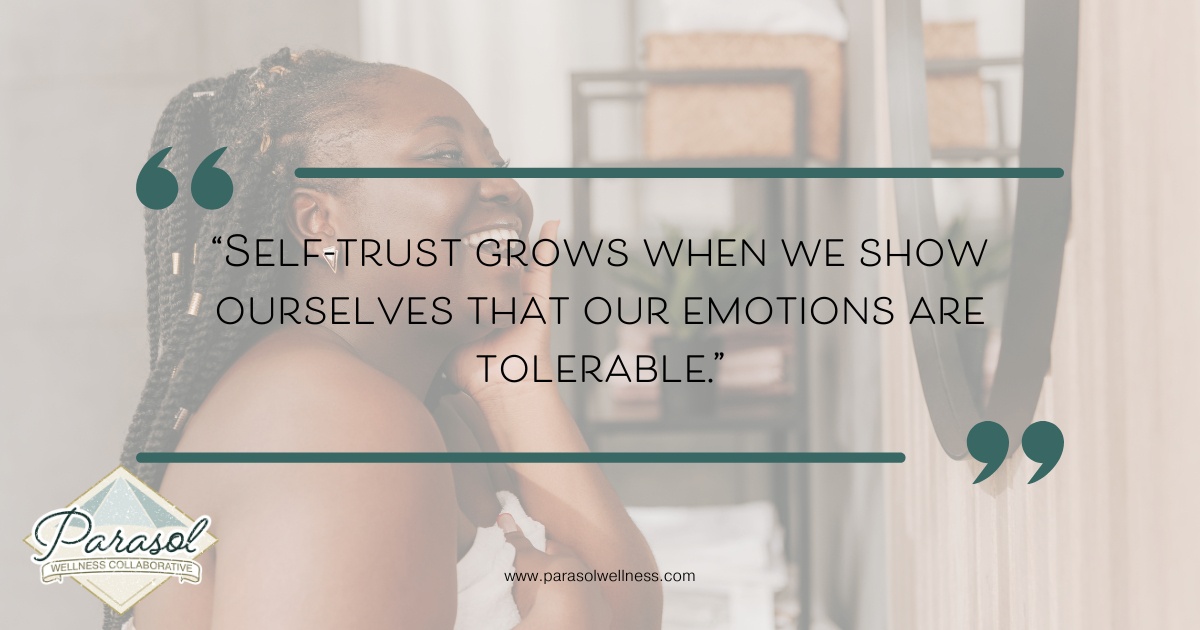
Self-trust grows when we repeatedly show ourselves that we can feel what we feel without becoming overwhelmed or self-punishing. Over time, this creates an internal sense of safety that no external validation can replace.
And from that safety, healthier relationships tend to emerge.
Why We Lose Ourselves in Relationships
Many people struggle not because they want too much from relationships, but because they want them to compensate for a lack of internal safety.
When we don’t trust ourselves to handle disappointment, uncertainty, or emotional pain, we often look for someone else to regulate those experiences for us. We may over-accommodate, avoid conflict, cling, withdraw, or silence our own needs—all in the name of connection.
These patterns are understandable. They were once adaptive. But they can quietly erode both self-trust and intimacy over time.
Loving Yourself Is Not a Personality Trait
Self-love is often framed as a mindset or attitude—something you either have or don’t. In reality, it’s a practice.
It looks like:
Noticing your internal experience without judgment
Taking responsibility for your reactions without shaming yourself
Choosing honesty over self-abandonment
Allowing emotions to move through you rather than managing them away
This kind of self-love isn’t flashy. It doesn’t eliminate discomfort or guarantee ease in relationships. But it does create steadiness—and steadiness changes everything.
A Gentle February Invitation
As we move through a month that often amplifies conversations about love and connection, consider turning some of that attention inward.
Instead of asking, How can I be more lovable? try asking:
How do I treat myself when things feel hard?
That question doesn’t demand immediate answers. It invites awareness.
And awareness, practiced gently and consistently, is where self-trust begins.
When you learn to stay with yourself—honestly, compassionately, imperfectly—you begin building the kind of attachment that supports every other relationship in your life.
That work doesn’t require perfection. It requires presence.
And that is something you can practice, one moment at a time.